


 USA
USA
 CANADA
Wallpaper Buying Guide: Materials, Textures, and Costs Compared
Choosing wallpaper can feel like a big task. There are so many colors, patterns, and types that it can be confusing to know where to start. This guide will make things easy to understand. We will look at different wallpaper materials, textures, and costs so you can find the best fit for your home and budget.
At Total Wallcovering, you can explore a wide selection of wallpapers in one place, making it simpler to compare styles, materials, and price ranges. This helps you choose with confidence and find a wallpaper that truly fits your space.
Why Wallpaper?
Wallpaper for walls is a fun and powerful way to change a room. Unlike paint, wallpaper can bring detailed designs, patterns, and even textures that add character. Whether you want a soft cozy feel or a bold look, there is a wallpaper style for everyone. The right wallpaper can make your home feel fresh and stylish with just a small change.
Main Types of Wallpaper Materials
There are several common wallpaper materials you will find when shopping. Each type has its own look, feel, and price range.
Vinyl Wallpaper
Vinyl is the most popular choice today. It is made with a coating of vinyl on the surface which makes it durable and easy to clean. Vinyl wallpaper is water-resistant, so it works well in kitchens, bathrooms, and other busy areas. You can wipe it with a damp cloth, which makes it family-friendly. Vinyl is also affordable and comes in many patterns and colors.
Peel and Stick Wallpaper
This is like a big sticker for your wall. Peel-and-stick wallpaper is easy to install and remove, which makes it perfect for renters or people who love to change styles often. For example, you can try our Reclaimed Shiplap Peel & Stick Wallpaper to get a farmhouse look without the cost of real wood. It usually costs a bit more than basic wallpaper, but the easy setup saves money on hiring help.
Fabric Wallpaper
Fabric wallpaper is made from natural fibers like silk, linen, or cotton. It feels soft and looks very luxurious. However, it is more expensive and harder to maintain since it can stain easily. This type of wallpaper is best for areas where there is less risk of spills, such as bedrooms or living rooms.
Paper Wallpaper
Paper wallpaper is the traditional type that has been used for many years. It is eco-friendly and comes in lots of printed designs. While it is not as durable as vinyl, it is often less costly and works well in spaces that do not get much wear and tear.
Specialty Designer Wallpaper
For those who want something unique, there are luxury designer wallpapers with bold patterns and artistic designs. One example is Astek wallpaper, known for modern and creative looks. Speciality wallpapers usually cost more, but they can turn a wall into a statement piece.
Textures and Finishes
Wallpaper is not just about the print. The texture also matters. Here are some common textures you may see:
- Flat Finish: Smooth wallpaper with no texture, perfect for simple patterns or murals.
- Embossed: Raised designs that add depth and can hide wall flaws.
- Grasscloth: Made from natural grass fibers, giving an earthy and eco-friendly look.
- Foil: Shiny metallic wallpaper that adds glamor and light reflection.
- Fabric-backed: Adds strength and a soft feel to walls.
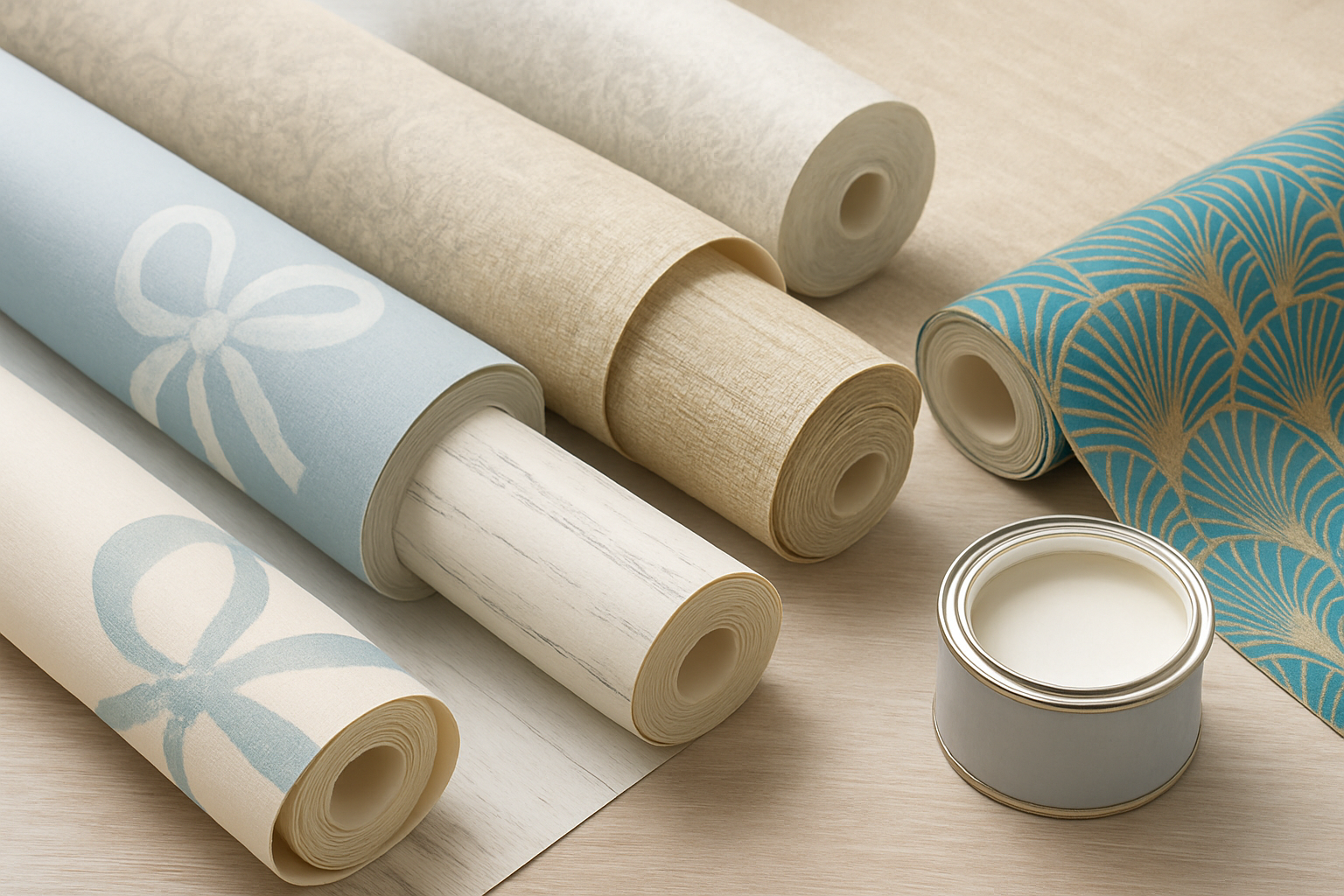
Textures can change the mood of a room. A smooth wallpaper feels clean and modern. A textured wallpaper feels warm and cozy. For example, the blue bow wallpaper brings a soft feminine touch with both design and texture.
Comparing Wallpaper Costs
Costs depend on the type of wallpaper you choose. Below is a general guide to what you can expect:
- Paper Wallpaper: $20 to $40 per roll. Affordable but less durable.
- Vinyl Wallpaper: $25 to $50 per roll. Durable and easy to clean.
- Peel and Stick: $30 to $60 per roll. Easy to apply, renter-friendly.
- Fabric Wallpaper: $70 to $200 per roll. Luxurious but high maintenance.
- Designer or Specialty: $100+ per roll. Unique, high-end style.
Keep in mind that costs also include installation. If you hire a professional, the price goes up. Peel-and-stick is often the most budget-friendly option if you want to save on labor.
Where to Use Different Wallpapers
Some wallpapers are better for certain rooms:
- Kitchen and Bathroom: Vinyl or peel-and-stick works best since they resist moisture.
- Bedroom: Paper or fabric wallpaper for a soft and relaxing vibe.
- Living Room: Designer wallpaper like Astek wallpaper can make a bold statement.
- Kids’ Room: Peel-and-stick wallpaper is fun, safe, and easy to replace as kids grow.
Tips for Buying Wallpaper
Here are a few things to keep in mind before making your purchase:
- Always order a sample first to see how it looks in your space.
- Measure your walls carefully and use a roll calculator to know how much you need.
- Check if the wallpaper is washable or scrubbable if you have kids or pets.
- Think about the long term. If you plan to move or change styles soon, peel-and-stick is best.
Conclusion
Wallpaper is a simple way to give your home a new personality. From budget paper rolls to luxury designer brands, there is something for every style and price point. By understanding the different materials, textures, and costs, you can choose the right wallpaper with confidence. Whether you love bold patterns, soft textures, or easy DIY solutions, the perfect wallpaper is out there waiting for you at Total Wallcovering.